Prev: Repeat Testing of Antibodies and Complements in Systemic Lupus Erythematosus: When Is It Enough?Next: Antinuclear antibodies in healthy people and non-rheumatic diseases – diagnostic and clinical implications
Record 043 · Research · 2015
Report of the First International Consensus on Standardized Nomenclature of Antinuclear Antibody HEp-2 Cell Patterns 2014-2015
Frontiers in Immunology · requested inclusion
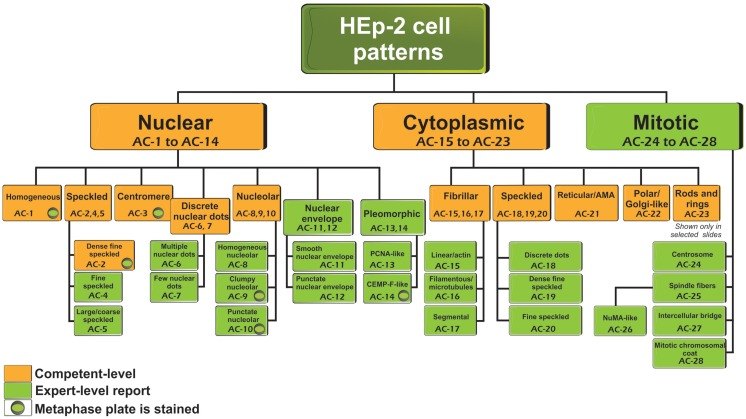
“Foundational open-access ICAP nomenclature paper defining nuclear, cytoplasmic, and mitotic HEp-2 patterns with AC codes, competent- vs expert-level reporting, and stating that clear cytoplasmic/mitotic reactivity should still be reported as ANA/HEp-2 IFA positive.”
Foundational open-access ICAP nomenclature paper defining nuclear, cytoplasmic, and mitotic HEp-2 patterns with AC codes, competent- vs expert-level reporting, and stating that clear cytoplasmic/mitotic reactivity should still be reported as ANA/HEp-2 IFA positive. Candidate notes: Patterns categorized into nuclear, cytoplasmic, and mitotic groups with anti-cell (AC) codes (AC-1 onward in the initial tree). When clear cytoplasmic or mitotic apparatus reactivity is present, the ANA IIF test is to be reported as positive. Distinguishes competent-level patterns (strongly recommended for reporting) from expert-level patterns. Homogeneous (AC-1) associated with chromatin components such as dsDNA, histones, and/or nucleosomes. Dense fine speckled (AC-2) should be differentiated from homogeneous; DFS is rarely associated with SLE/SjS/SSc and often seen in healthy or non-SARD settings. Disease associations in tables are primarily based on target antigens and are not meant for inclusion as clinical diagnoses on reports alone. Limits noted in the record: First ICAP edition (2015); pattern tree has since expanded (later AC codes). A positive ANA is not a diagnosis. Claims in this record are not verified.
A positive ANA is not a diagnosis. Claims in this record are not verified.
source
- ANA_pattern
- false_positives
- interpretation
- testing_methods
Research
Also in this file
View all in file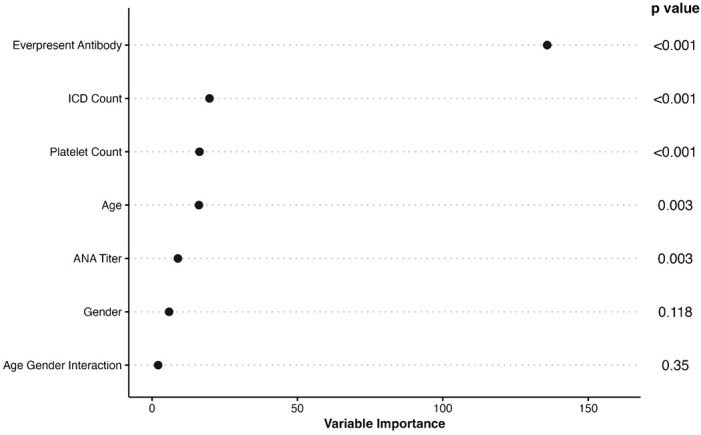 Identifying antinuclear antibody positive individuals at risk for developing systemic autoimmune disease: development and validation of a real-time risk model24.54.E · Frontiers in Immunology
 Antinuclear antibody-negative systemic lupus erythematosus: How many patients and how to identify?22.34.E · Archives of Rheumatology
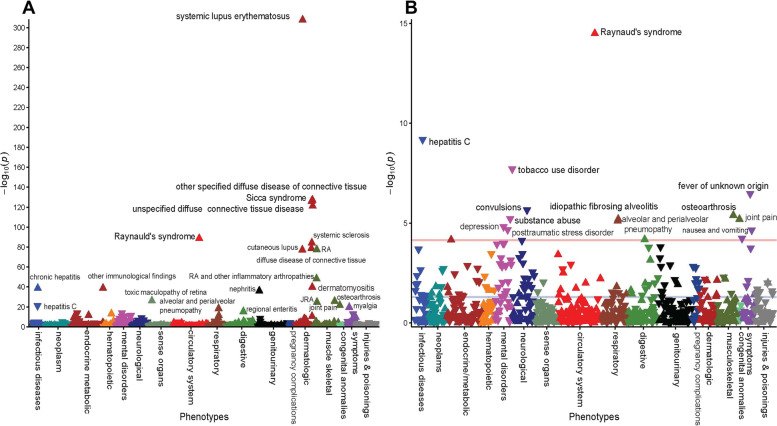 Clinical diagnoses associated with a positive antinuclear antibody test in patients with and without autoimmune disease23.35.E · BMC Rheumatology
 High concomitance of disease marker autoantibodies in anti-DFS70/LEDGF autoantibody-positive patients with autoimmune rheumatic disease08.36.E · Lupus