Prev: Clinical relevance of HEp-2 indirect immunofluorescent patterns: the International Consensus on ANA patterns (ICAP) perspectiveNext: The International Consensus on ANA Patterns (ICAP) in 2021—The 6th Workshop and Current Perspectives
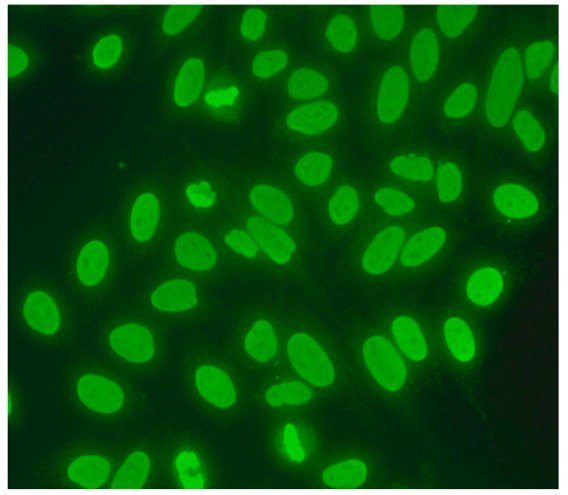
Record 046 · Review · 2025
The Art of Interpreting Antinuclear Antibodies (ANAs) in Everyday Practice
Journal of Clinical Medicine (MDPI) · requested inclusion
“Narrative review of ANA literature from 1961-2025 focused on real-world interpretation challenges: IIF on HEp-2 cells as the gold standard, titer thresholds, ICAP pattern classification, and clinical correlation. Stresses that low-titer ANA lacks diagnostic significance and that clinical context is essential to avoid misdiagnosis and overtreatment.”
Narrative review of ANA literature from 1961-2025 focused on real-world interpretation challenges: IIF on HEp-2 cells as the gold standard, titer thresholds, ICAP pattern classification, and clinical correlation. Stresses that low-titer ANA lacks diagnostic significance and that clinical context is essential to avoid misdiagnosis and overtreatment. Candidate notes: Titres higher than 1:160 may provide greater specificity in differentiating true positives from false positives in healthy individuals IIF on HEp-2 cells remains the gold standard for ANA detection, revealing nuclear, cytoplasmic and mitotic fluorescence patterns ANA testing has limited utility for monitoring disease activity; repeat testing is mainly indicated with clinical worsening or evolving symptoms Limits noted in the record: Narrative rather than systematic review; literature selection and search strategy are not fully reproducible Single-center authorship from one dermatology department A positive ANA is not a diagnosis. Claims in this record are not verified.
A positive ANA is not a diagnosis. Claims in this record are not verified.
source
- change-over-time
- disease-activity
- healthy-people
- interpretation
- pattern
- positive-ana
- testing-method
- titer
Review
Also in this file
View all in file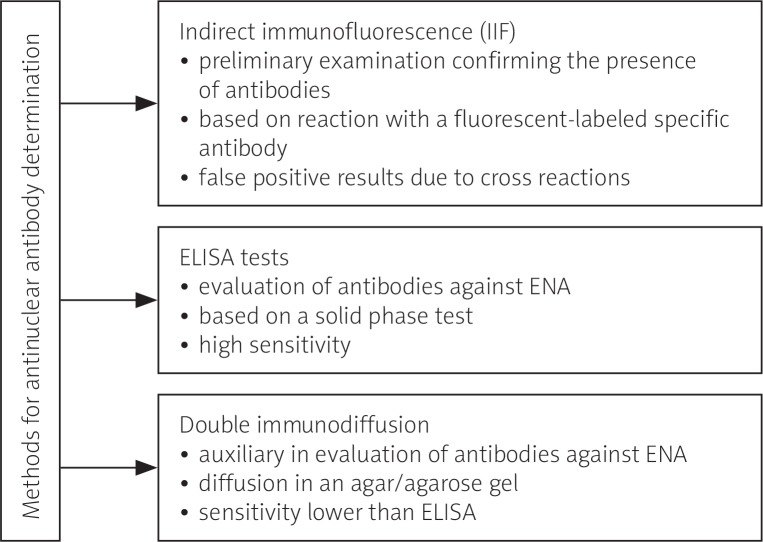 Antinuclear antibodies in healthy people and non-rheumatic diseases – diagnostic and clinical implications00.44.X · Review article
 Clinical relevance of HEp-2 indirect immunofluorescent patterns: the International Consensus on ANA patterns (ICAP) perspective19.45.X · Annals of the Rheumatic Diseases
 The International Consensus on ANA Patterns (ICAP) in 2021—The 6th Workshop and Current Perspectives22.47.X · Journal of Applied Laboratory Medicine
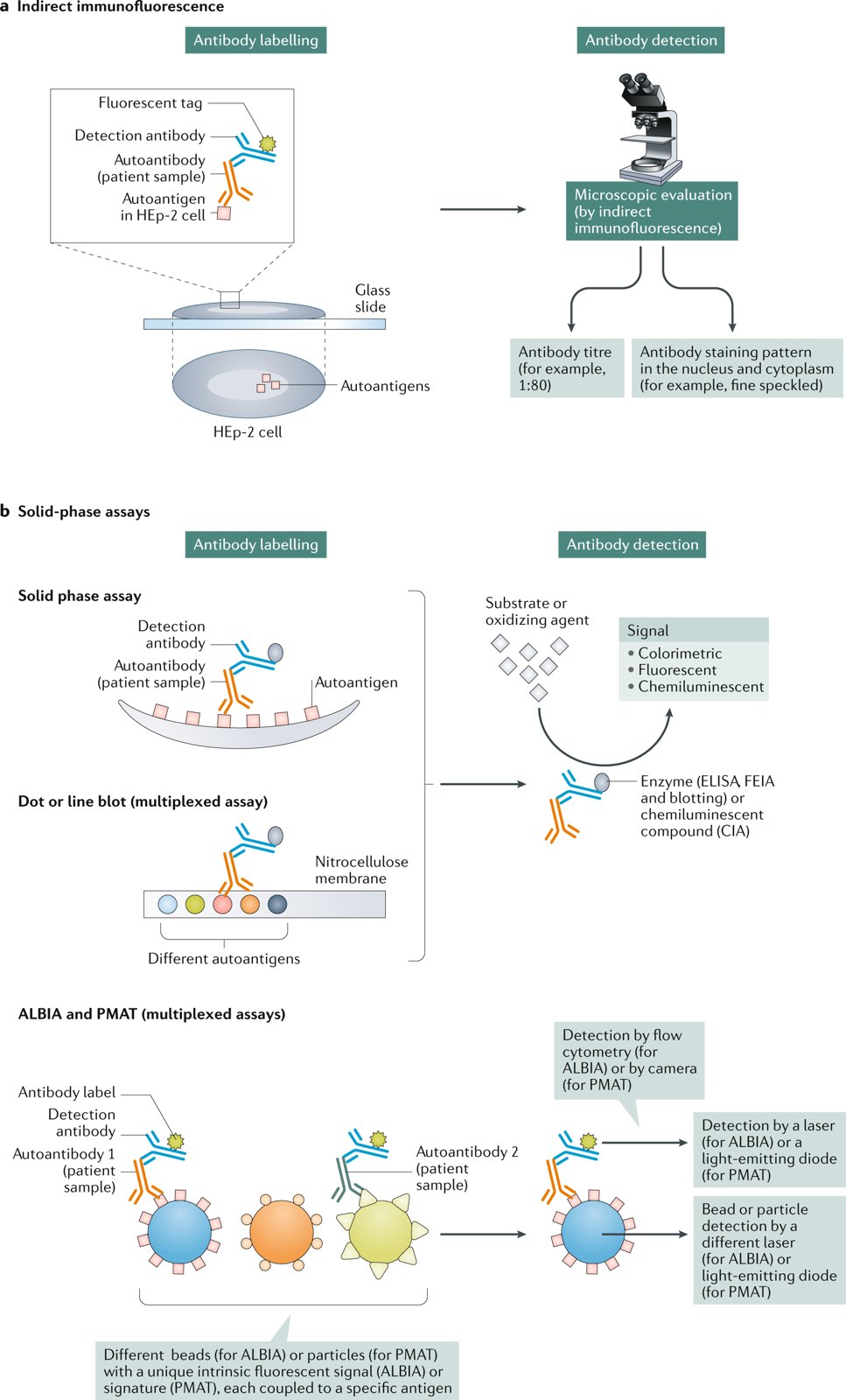 Understanding and interpreting antinuclear antibody tests in systemic rheumatic diseases20.48.X · Nature Reviews Rheumatology