Prev: Influence of three soil types on the physical, chemical, and organoleptic characteristics of two varieties of kidney tomato hydroponically cultivated under a panqar huyu systemNext: Deep winter greenhouses

Record 019 · Guides · 2026
Deep winter greenhouses
University of Minnesota Extension
“UMN Extension hub on deep winter greenhouses (DWG): passive-solar, east–west structures with steep south glazing and fan-driven underground thermal storage — related…”
UMN Extension hub on deep winter greenhouses (DWG): passive-solar, east–west structures with steep south glazing and fan-driven underground thermal storage — related cold-climate season extension but distinct from pit walipini excavation. Defines DWGs as passive-solar greenhouses using sun as primary heat source. Built east–west with steeply sloped south-facing glazing to capture solar energy on coldest days; solar-heated air drawn underground with a fan and stored in insulated soil/rock thermal mass for night heat. Intended for small- and mid-sized vegetable farms in northern cold climates; farm-scale prototypes partnered with Minnesota farms. Crops suited include lettuces, herbs, brassicas, Asian greens, and sprouts (cold-hardy, lower-light).
RELATED BUT DISTINCT from walipini/pit greenhouse: DWG is not primarily an excavated pit; heat storage uses ducts/thermal battery rather than full earth-sheltering of growing space.
extension_guide|candidate
- Defines DWGs as passive-solar greenhouses using sun as primary heat source.
- Built east–west with steeply sloped south-facing glazing to capture solar ene…
- Intended for small- and mid-sized vegetable farms in northern cold climates; …
Defines DWGs as passive-solar greenhouses using sun as primary heat source.
Also in this file
View all in file Deep winter greenhouses26.20.G · University of Minnesota Extension
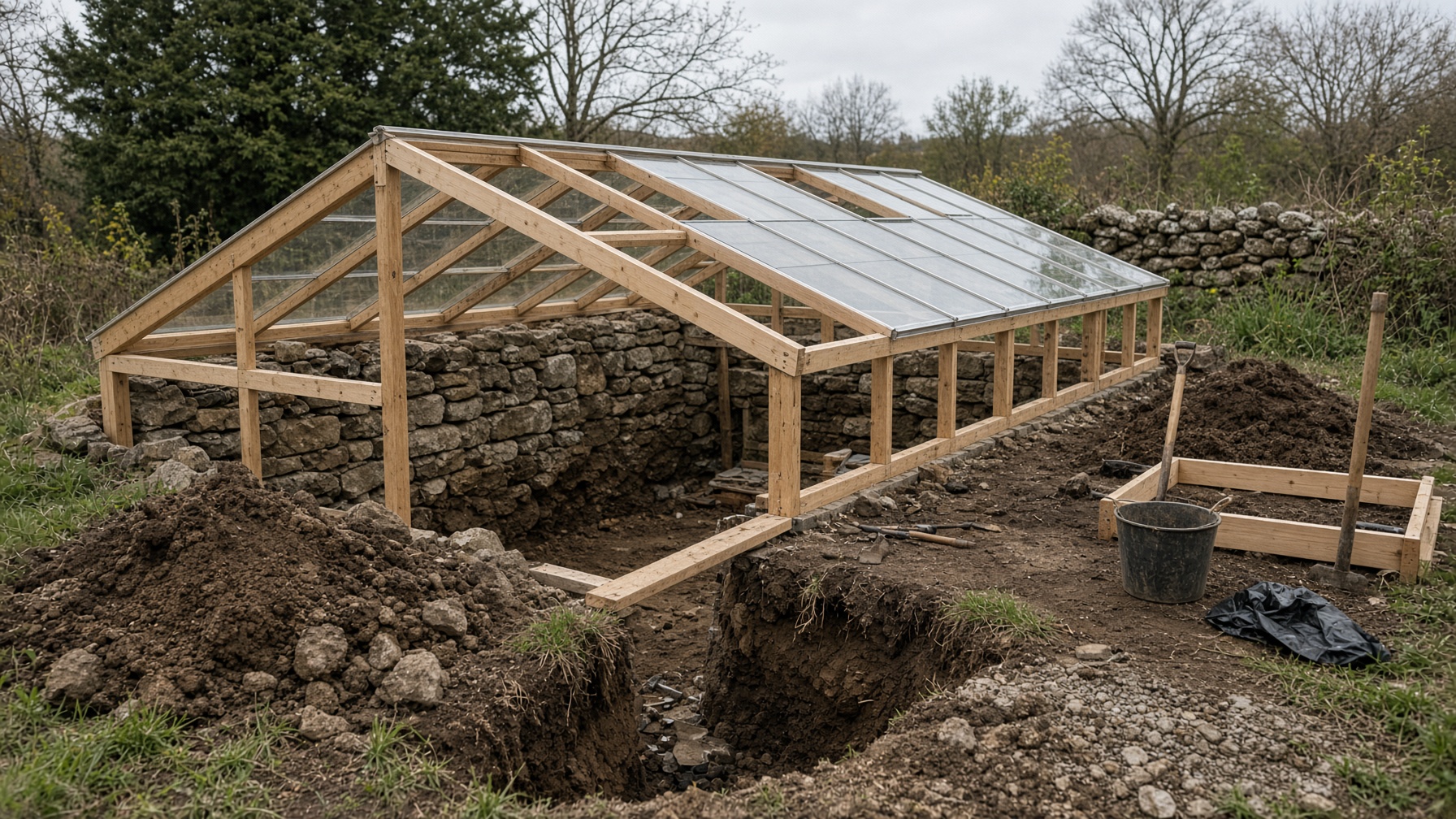 Greenhouses for Home Gardeners in Alaska24.21.G · University of Alaska Fairbanks Cooperative Extension Service
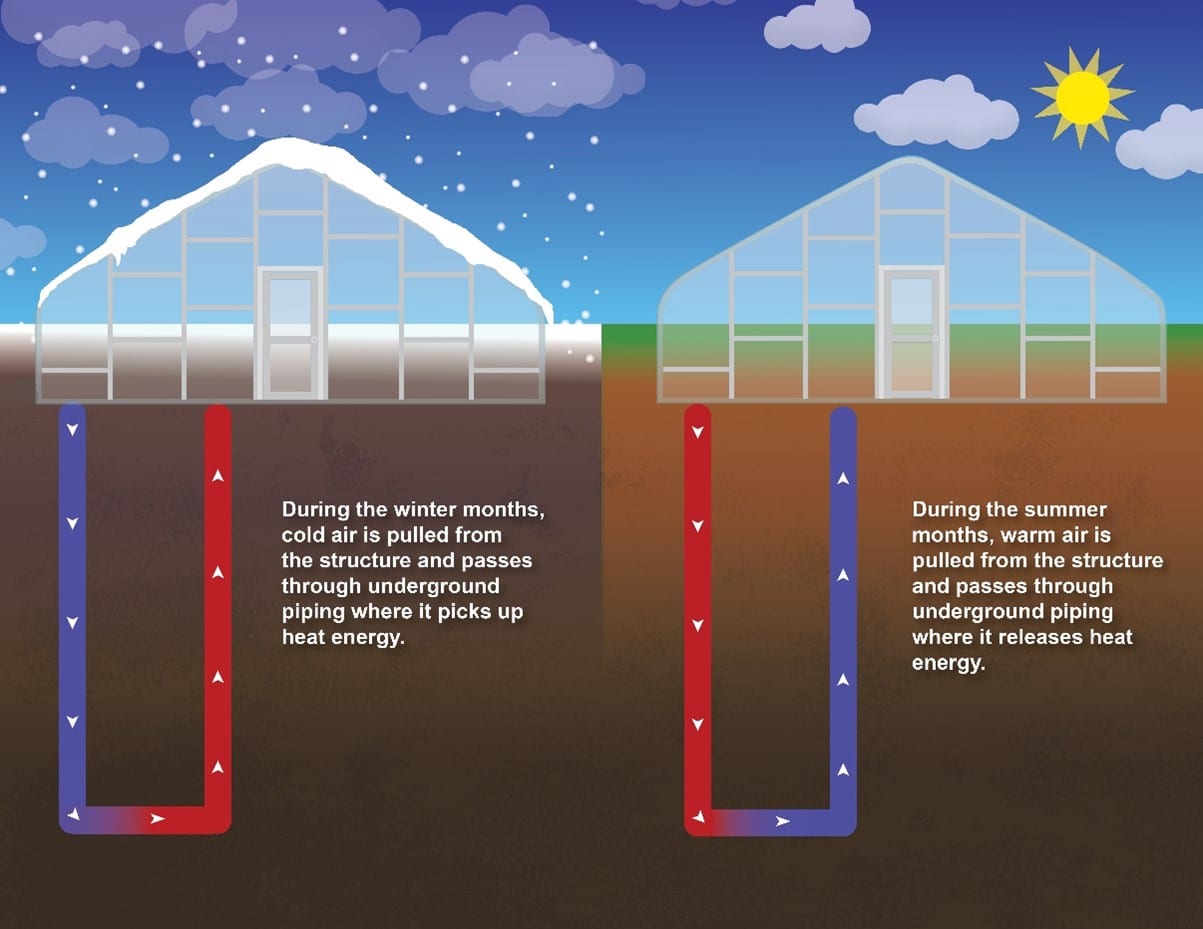 Geothermal Greenhouses: Exploring the Potential21.22.G · National Center for Appropriate Technology (NCAT / ATTRA)Guía para la construcción de invernaderos o fitotoldos: Una alternativa para garantizar la seguridad y soberanía alimentaria en emergencias12.23.G · FAO Bolivia