Prev: Sunken Greenhouse: The Solution To Plant Year RoundNext: Underground Greenhouses and Walipini Greenhouse Foundations
Record 056 · Guides · 2026
Tips for Walipini Construction
Mother Earth News
“Mother Earth News reader contribution by Ceres Greenhouse Solutions co-founder on customizing walipini/earth-sheltered designs for North American latitudes, framing, moisture,…”
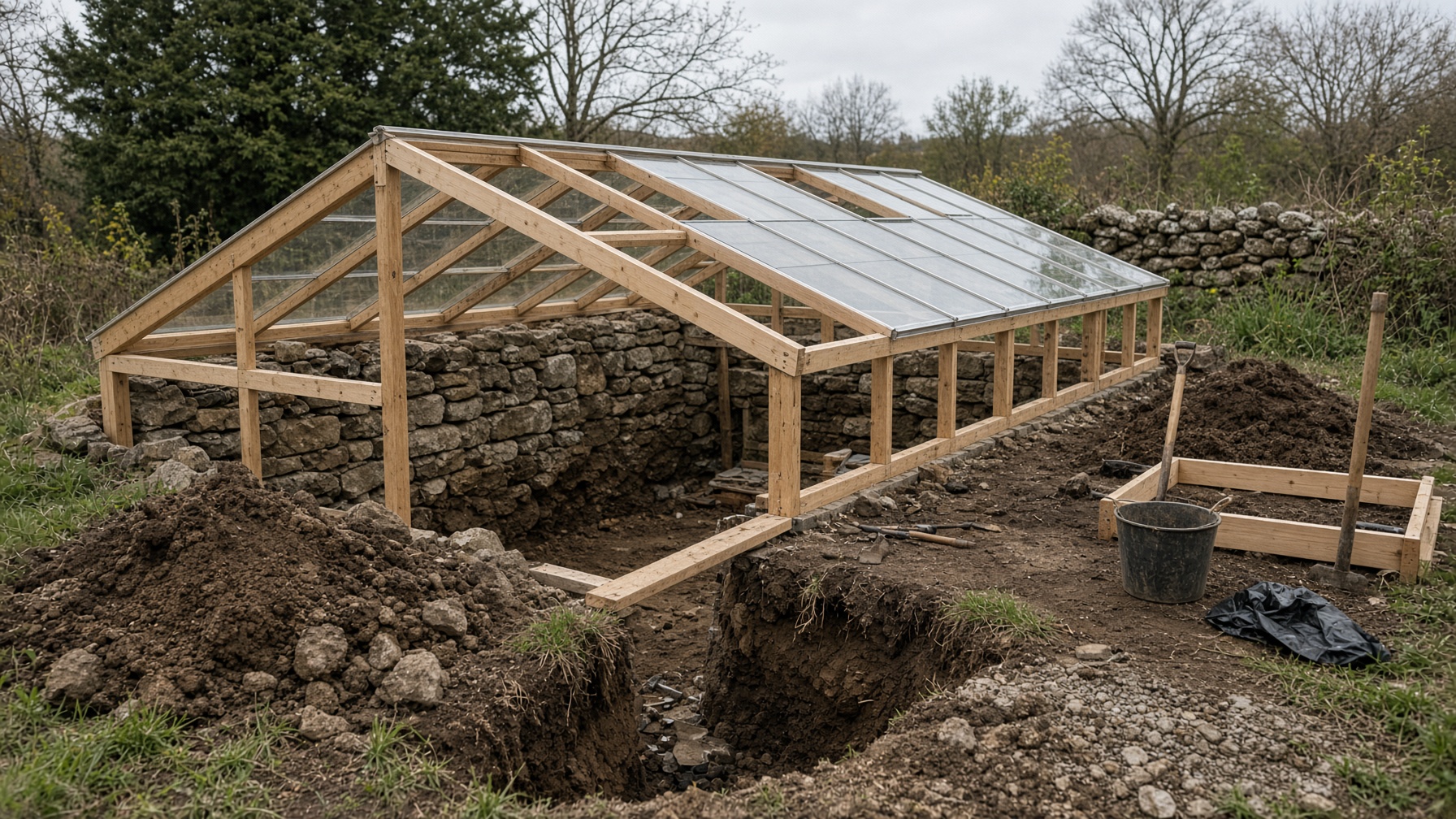
Mother Earth News reader contribution by Ceres Greenhouse Solutions co-founder on customizing walipini/earth-sheltered designs for North American latitudes, framing, moisture, insulation, and realistic budgets. Recounts 1990s Benson Institute prototype underground greenhouse near La Paz, Bolivia called Walipini ('place of warmth'); simple pit with plastic roof for low-cost energy-efficient year-round growing. Warns copying Bolivia design exactly fails at higher N. American latitudes because winter sun is low (example: Denver winter solstice ~26° off horizon vs La Paz winter ~50°). Recommends designing for local solar angles; often need steeper roof, partial underground / earth-sheltered form with above-ground south/east/west glazing, or Oehler-style shaded front cold-sink with illuminated rear beds. Original Benson earthen walls without interior framing may be short-lived in many soils; favors wood post-and-beam, concrete block, or poured retaining walls.
Evidence tier: popular_guide. Popular magazine blog / reader contribution by commercial greenhouse designer (Ceres) — carefully labeled popular_guide, not peer-reviewed research.
popular_guide|candidate
- Recounts 1990s Benson Institute prototype underground greenhouse near La Paz,…
- Warns copying Bolivia design exactly fails at higher N. American latitudes be…
- Recommends designing for local solar angles; often need steeper roof, partial…
Recounts 1990s Benson Institute prototype underground greenhouse near La Paz, Bolivia called Walipini ('place of…
Also in this file
View all in file How to Design a Year-Round Solar Greenhouse26.54.G · Mother Earth News
 Deep winter greenhouses26.19.G · University of Minnesota Extension
 Deep winter greenhouses26.20.G · University of Minnesota ExtensionGreenhouses for Home Gardeners in Alaska24.21.G · University of Alaska Fairbanks Cooperative Extension Service