Prev: Fruit Trenches: Cultivating Subtropical Plants in Freezing TemperaturesNext: Reinventing the Greenhouse

Record 068 · Guides · 2020
Is a Walipini Style Sunken Greenhouse Right for You?
Green Home Gnome
“Practical pros/cons guide: Benson La Paz origin, 6–8 ft dig, drainage/water-table rules (≥5 ft above water table; avoid if water <13 ft deep), minimum 8×12 ft thermal mass, and…”
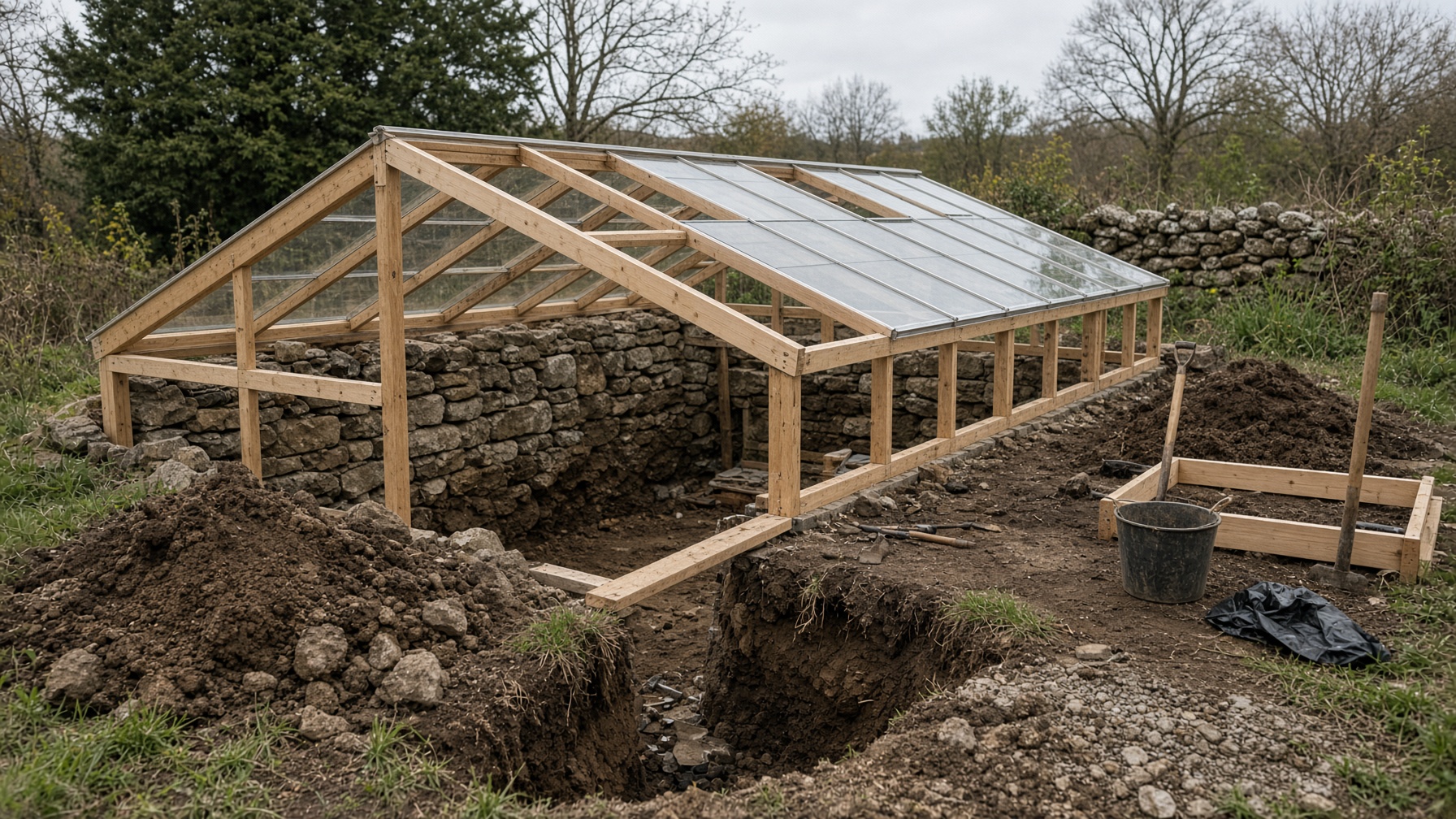
Practical pros/cons guide: Benson La Paz origin, 6–8 ft dig, drainage/water-table rules (≥5 ft above water table; avoid if water <13 ft deep), minimum 8×12 ft thermal mass, and Schiller latitude-angle warning against fully sunk high-latitude pits. States Walipini is Aymara for "place of warmth"; originally constructed 1990s by Benson Agriculture and Food Institute for La Paz, Bolivia as low-cost sunk greenhouse without conventional heat. Construction outline: rectangular dig 6–8 ft; save topsoil; berm from deeper soil; taller wall faces winter sun; walls may need stone/earthbags/brick/block; rainbarrels for mass; double plastic roof; optional insulated shutters; vents via doors/windows/roof. Benefits framed as passive energy; cites John H. Lienhard (Univ. of Houston) on below-ground temperature lag. Cons: excavation cost/labor; vulnerable to soil instability and water damage—"pit greenhouse could easily just become a pit."
Evidence tier: popular_guide. Practitioner blog synthesizing Benson/Schiller; not a measured case study.
popular_guide|candidate
- States Walipini is Aymara for "place of warmth"; originally constructed 1990s…
- Construction outline: rectangular dig 6–8 ft; save topsoil; berm from deeper …
- Benefits framed as passive energy; cites John H. Lienhard (Univ. of Houston) …
States Walipini is Aymara for "place of warmth"; originally constructed 1990s by Benson Agriculture and Food…
Also in this file
View all in file Deep winter greenhouses26.19.G · University of Minnesota Extension
 Deep winter greenhouses26.20.G · University of Minnesota Extension
 Greenhouses for Home Gardeners in Alaska24.21.G · University of Alaska Fairbanks Cooperative Extension Service
 Geothermal Greenhouses: Exploring the Potential21.22.G · National Center for Appropriate Technology (NCAT / ATTRA)